Industry Information Database

Overview of the Project
Client
Minisry of Industries
Type
Government
Category
Web Application
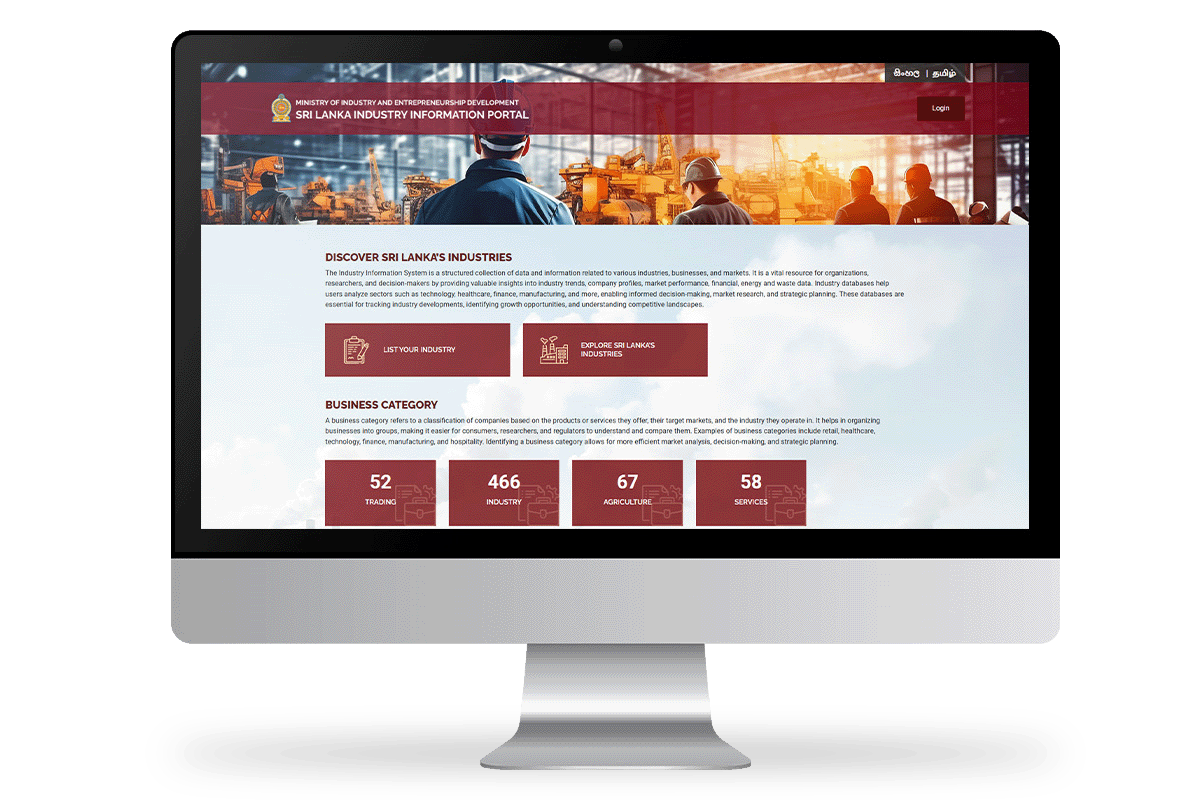
The Industry Information Database is a secure, centralised, web-based system developed to consolidate industry-related data across government institutions and support evidence-based policymaking, regulatory oversight, and targeted development programmes. The system was designed to address long-standing data fragmentation by providing a single digital platform for industry registration, profile management, periodic data updates, validation, reporting, and institutional monitoring. Through structured workflows and role-based access, the platform enables industry stakeholders, field officers, divisional authorities, and central ministry officials to collaborate within a controlled and traceable digital environment.
The Challenge
- Government institutions required a reliable and scalable system to maintain accurate, up-to-date information on industries across sectors and regions. Existing data was often fragmented, manually maintained, and difficult to validate, limiting the ability of policymakers and officials to generate timely insights or monitor industrial development effectively.
- Industry records were distributed across disconnected institutional processes, making it difficult to maintain a single, accurate source of truth.
- Manual registration, verification, and update processes created delays, inconsistencies, and challenges in regulatory follow-up.
- There was no unified validation workflow involving field officers, divisional authorities, and ministry-level users, resulting in limited traceability and accountability.
- Management reporting and policy analysis were time-consuming, with limited ability to drill down by geography, sector, enterprise size, ownership indicators, or time period.
- The system needed to support large-scale data volumes, strong security, and long-term institutional ownership while remaining accessible to users in distributed and low-bandwidth environments.
Key Features
- Secure Industry Registration and Profile Management
The platform enables industries to register online, maintain digital profiles, and submit periodic updates through structured forms, ensuring more accurate and current enterprise-level data.
- Multi-Tier Validation Workflows
Submitted data follows a configurable validation process involving field officers, divisional authorities, and central ministry officials, with clear approval hierarchies, status tracking, and accountability at each stage.
- Role-Based Access Control
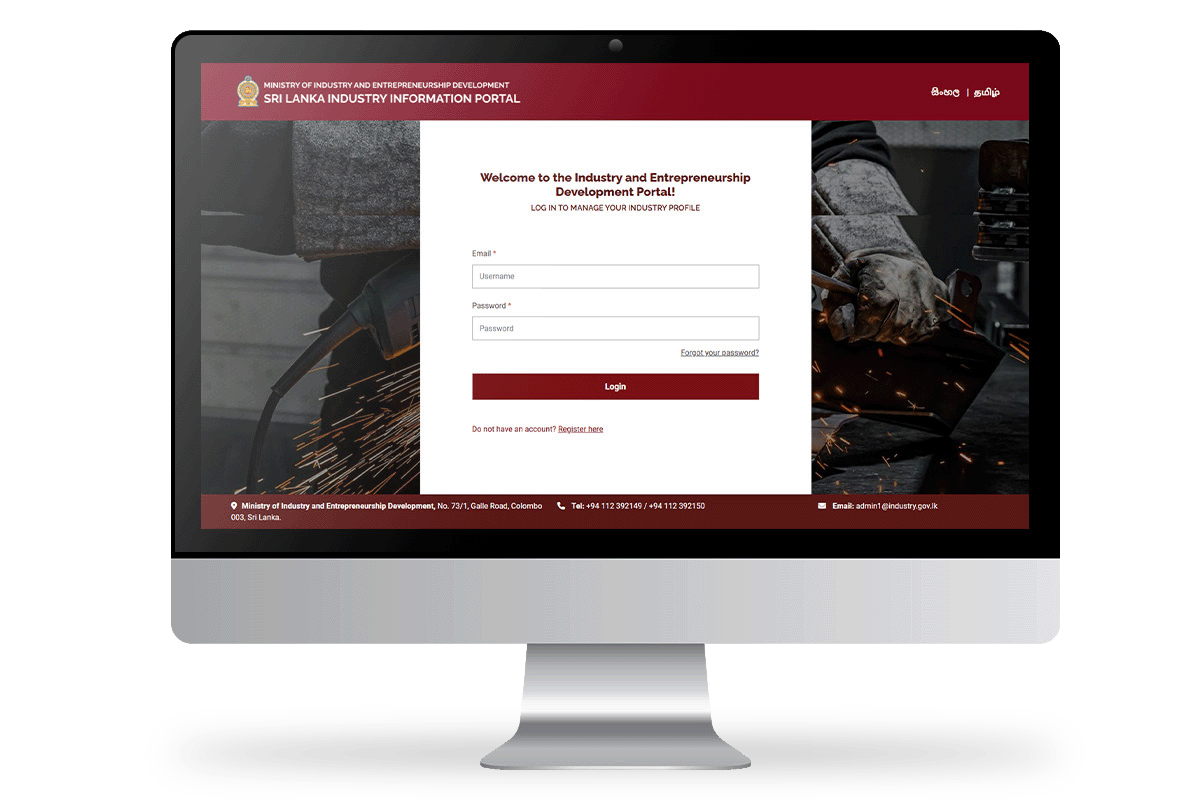
A comprehensive RBAC model governs access for administrative users, official users, field officers, and industry stakeholders, ensuring that each user group can only access the functions and data relevant to their responsibilities.
- Dashboards and Analytical Reporting
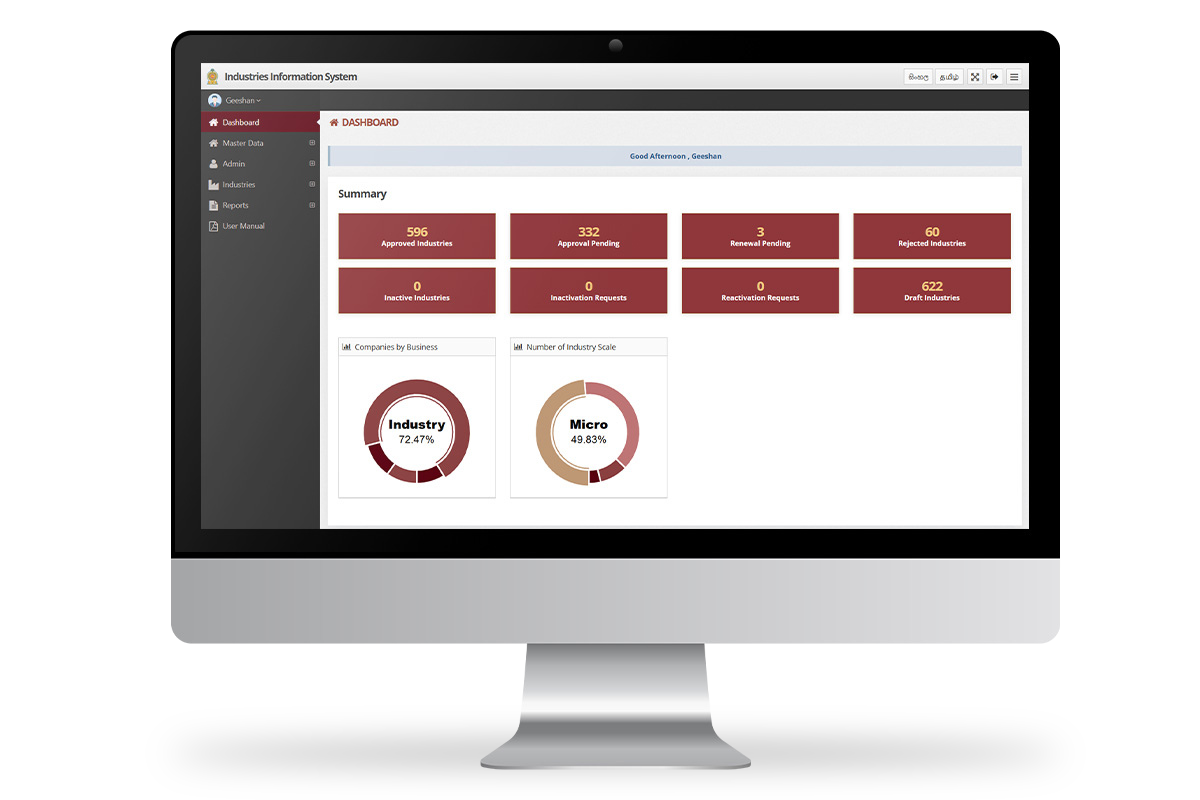
The system provides dashboards and drill-down reports segmented by sector, geography, enterprise size, gender ownership indicators, and time period, supporting evidence-based decision-making and targeted policy interventions.
- Automated Notifications and Reminders
Built-in notifications and reminders support annual data updates, compliance follow-ups, workflow progression, and timely action by relevant stakeholders.
- Scalable Data Architecture
The platform was architected to handle large-scale datasets and scale toward millions of enterprise records while maintaining system performance and reliability.
- Security and Compliance Controls
Advanced security measures include encryption at rest and in transit, multi-factor authentication, secure session handling, audit logs, and compliance with national data protection and confidentiality requirements.
- Mobile-Optimised User Experience
Fully responsive interfaces support access across desktop, tablet, and mobile devices, enabling field officers and enterprises to use the system effectively in distributed or low-bandwidth environments.
- Institutional Ownership and Sustainability
The solution was delivered using open-source technologies, with source code, technical documentation, automated backup processes, disaster recovery mechanisms, and post-go-live maintenance support provided to ensure long-term sustainability.

Copyright © 2026 TekGeeks PVT Ltd.
All
rights reserved.